04 March 2026
Recessed spotlights and professional lamps: guide to choosing between low and high voltage
Choosing recessed spotlights is a crucial moment in the design of a professional lighting system. Understanding the differences between low-voltage and high-voltage lamps, as well as selecting the correct installation type among ceiling, wall, and floor, allows you to achieve optimal results in terms of safety, energy efficiency, and aesthetics. In this technical guide, Amlux walks you through an analysis of the various available solutions, providing the tools necessary to choose the most suitable recessed LED spotlights for your specific needs, whether for residential, commercial, or outdoor spaces.
The article will cover the following key topics to help you navigate the world of recessed lighting:
- What are the fundamental differences between low-voltage and high-voltage lamps?
- When should you choose ceiling recessed spotlights for indoor lighting?
- How to use wall recessed spotlights to create lighting pathways?
- What characteristics must floor recessed spotlights for outdoor use have?
- What are the advantages of LED technology for recessed spotlights?
- How to design an efficient and safe recessed lighting system?
What are the fundamental differences between low-voltage and high-voltage lamps?
The distinction between low-voltage and high-voltage lamps is one of the most relevant aspects when choosing recessed spotlights. This difference does not only concern the technical aspect of the operating voltage, but profoundly influences installation safety, energy efficiency, and the application possibilities of the lighting system.
Low-voltage lamps generally operate at 12V or 24V DC and require a transformer or driver to convert the mains voltage (220–230V AC) to the device's operating voltage. This configuration offers significant safety advantages, especially in humid environments or near surfaces in contact with water. Low-voltage LED recessed spotlights are particularly suitable for floor installations in outdoor spaces, wellness areas, pool edges, and wherever a higher level of electrical safety is required.
High-voltage lamps, which operate directly at 100–240V AC or 220–230V AC, eliminate the need for external transformers, greatly simplifying installation and reducing the overall system costs. These devices are equipped with an integrated driver and represent the ideal solution for most standard residential and commercial ceiling recessed applications, where installation takes place in dry and protected conditions. The Amlux Acrux series, for example, offers recessed spotlights operating directly at 230V, eliminating additional components and simplifying maintenance.
Comparison table: low voltage vs high voltage
|
Feature |
Low voltage (12V/24V DC) |
High voltage (100–240V AC) |
|
Safety |
High, ideal for humid areas and outdoor environments in contact with water |
Standard, suitable for dry indoor environments |
|
Required components |
Requires external transformer or driver |
Integrated driver, no additional components |
|
Ease of installation |
Moderate, requires space for transformer |
High, direct installation |
|
Efficiency |
High, thanks to the separately installed driver |
Moderate, because the driver must dissipate its heat together with the LED |
|
Maintenance |
Multiple components to check |
Reduced, single device |
|
Ideal applications |
Outdoor floors, humid areas, pools, saunas |
Indoor ceilings, walls, residential and commercial environments |
The choice between low and high voltage depends primarily on the installation environment and safety requirements. For projects involving humid areas, outdoor floor installations, or areas subject to occasional water contact, low voltage is the most prudent solution. For ceiling installations in indoor environments, shops, offices, and homes, high-voltage spotlights offer the best balance between ease of installation and operational efficiency.
When should you choose ceiling recessed spotlights for indoor lighting?
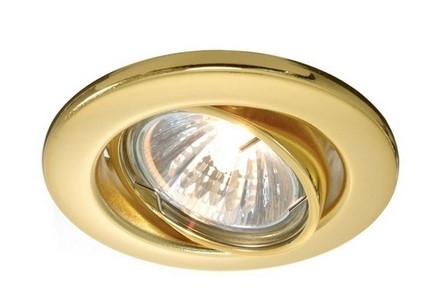
Ceiling recessed spotlights represent the most widespread and versatile solution for general indoor lighting. These devices integrate seamlessly into the false ceiling, creating a clean and minimal visual effect that enhances the architecture of spaces without intrusive elements.
Designing a lighting system with ceiling LED recessed spotlights requires the analysis of several technical parameters. The first aspect to consider is the luminous output, expressed in lumens, which determines the intensity of the emitted light. For a medium-sized living room, for example, it is advisable to opt for spotlights with a luminous flux between 800 and 1500 lumens, while for hallways and passageways, solutions from 400–600 lumens may be sufficient.
The beam angle is another fundamental parameter. Spotlights with a medium beam, between 15° and 40°, are ideal for accent lighting, perfect for highlighting artworks, architectural features, or specific areas. Spotlights with a wide beam, from 60° to 120°, provide instead a uniform light distribution, ideal for general lighting in environments such as living rooms, dining rooms, offices, and commercial spaces.
The IP protection rating is crucial for determining the suitability of spotlights in different environments. For standard areas such as living rooms and bedrooms, an IP20 rating is sufficient. For bathrooms and kitchens, where greater humidity is present, it is necessary to opt for spotlights with an IP44 rating or higher. Professional models available in the Amlux catalogue, such as the Pegaso and Alcor series by Arena Luci, offer IP54 front protection, making them ideal for porches, bathrooms, open-plan spaces, and hallways.
The recessing depth and hole dimensions are practical aspects not to be underestimated. It is essential to verify the available space in the false ceiling before making a choice: ultra-flat spotlights require minimum recessing depths (approximately 55–65 mm), while more powerful models may require up to 80–85 mm of depth. The Amlux Acrux series, for example, features solutions with variable mounting depths, from the 90 mm version (55 mm depth) to the 195 mm version (82 mm depth).
A parameter that is often underestimated but of great importance is the colour rendering index (CRI). Values above 80 guarantee faithful colour reproduction, essential in residential and commercial environments. For professional applications such as clothing stores, art galleries, or photography studios, it is advisable to opt for spotlights with a CRI above 90, such as the Alcor and Polaris-I models available in the Amlux catalogue.
How to use recessed wall spotlights to create light paths?
Wall LED recessed spotlights represent an elegant and functional solution for creating lighting pathways along staircases, corridors, and passageways. These devices are installed within interior walls, generally at a height of between 20 and 40 cm from the floor, providing discreet safety lighting that guides movement without causing glare.
Installing wall recessed spotlights requires careful planning during the building design or renovation phase, as it requires dedicated recessed boxes to be prepared within the wall. The optimal distance between spotlights varies according to the luminous intensity and beam angle, but it is generally recommended to position the devices at intervals of 1.5–2 metres to ensure a uniform distribution of light along the pathway.
These spotlights are particularly appreciated for a range of applications:
- Safety lighting for interior staircases, ensuring optimal visibility of the steps
- Lighting pathways in long corridors, creating an elegant and functional visual effect
- Enhancement of architectural features such as niches, shelves, or decorative panels
- Discreet night lighting in passageways between bedrooms and bathrooms
- Step lighting in commercial environments such as hotels, restaurants, and wellness centres
LED technology ensures extremely low energy consumption, making it possible to keep these spotlights on for extended periods without significant impact on energy costs. The long lifespan of LED sources (up to 30,000 hours) also reduces the frequency of maintenance work, an aspect that is particularly advantageous given the complexity of accessing spotlights recessed into walls.
For environments such as bathrooms, laundry rooms, or areas subject to humidity, it is essential to select spotlights with an appropriate IP protection rating. Models with an IP44 classification or higher provide the necessary protection against water splashes and ambient humidity, ensuring both safety and long-term durability.
What characteristics should recessed outdoor floor spotlights have?
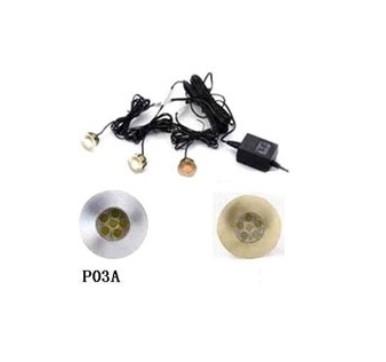
Outdoor floor recessed spotlights require specific technical characteristics to withstand the harshest environmental conditions and continuous foot traffic. These devices represent an ideal solution for lighting driveways, gardens, terraces, and pedestrian pathways, combining functionality and safety with high aesthetic value.
Mechanical resistance is the first fundamental requirement. Floor spotlights must be designed with robust structures, typically made of stainless steel or anodised aluminium, capable of withstanding significant loads. Standard pedestrian-grade models resist loads of up to 1,000 kg, sufficient for foot traffic, while drive-over certified versions are available to withstand vehicle passage, with load capacities exceeding 2,000 kg.
Waterproofing is another crucial aspect. An IP67 protection rating is the minimum recommended standard for outdoor floor recessed spotlights, guaranteeing total protection against dust and resistance to temporary submersion in water up to 1 metre deep. This characteristic ensures optimal operation even in heavy rain, standing water, or during cleaning operations with water jets.
The construction materials must guarantee corrosion resistance. AISI 316 stainless steel is the premium choice for marine environments or areas with high salinity, while anodised aluminium offers an excellent strength-to-weight ratio for most residential applications. Protective glass must be tempered and reinforced, capable of withstanding thermal shocks and mechanical impacts without compromising transparency and luminous efficiency.
Floor recessed spotlights must operate correctly across a wide temperature range, generally from -20°C to +50°C. This characteristic is essential to ensure reliable functionality during both harsh winter months and hot summer days. Integrated drainage systems prevent water pooling that could compromise long-term performance.
Regarding operating voltage, outdoor floor spotlights are available in both low-voltage (12V or 24V DC) and high-voltage (100–240V AC) versions. Low voltage offers significant safety advantages, especially in areas subject to frequent water contact such as pool edges, fountains, or wellness zones. High-voltage versions simplify installation by eliminating the need for external transformers, making them particularly suitable for driveways and dry pedestrian areas.
Correct installation requires the use of specific materials to ensure long-lasting sealing. Amlux recommends the use of WEIPU connectors or IP68 connector kits of up to 5 poles to preserve IP protection over time, ensuring that the spotlights maintain their waterproofing characteristics even after years of use.
What are the advantages of LED technology for recessed spotlights?
LED technology has revolutionised the recessed lighting sector, offering significant advantages over traditional halogen solutions. Amlux exclusively offers LED recessed spotlights, recognising the technical and economic superiority of this technology for both professional and residential applications.
Energy efficiency is the most evident benefit of LED technology. LED recessed spotlights consume up to 80% less energy than equivalent halogen lamps, resulting in substantial savings on energy bills. A 9W LED spotlight, for example, produces a luminous flux comparable to a 50W halogen lamp, maintaining the same lighting quality while drastically reducing consumption.
The exceptional lifespan of LED sources is another determining advantage. While traditional halogen lamps offer a useful life of approximately 2,000 hours, professional LED spotlights such as those offered by Amlux guarantee up to 20,000–30,000 hours of operation without significant degradation of luminous flux. This translates into lower maintenance and replacement costs, an aspect particularly relevant for installations in hard-to-reach positions such as high ceilings or outdoor floors.
The operational characteristics of LEDs offer further practical benefits:
- Instant switching to full brightness, with no warm-up time
- No UV or IR radiation, which protects furniture, fabrics, and artworks from deterioration
- Low heat output, improving ambient comfort and reducing thermal loads on air conditioning systems
- Precise dimming capability, allowing adjustment of light intensity without altering the colour temperature
- Compact dimensions enabling the creation of ultra-flat fixtures, ideal for false ceilings with limited space
Flexibility in colour temperature is a further advantage of LED technology. The Amlux Acrux series spotlights, for example, integrate a colour tone selection system with three options (3000K warm white, 4000K natural white, 6000K cool white), allowing the lighting to be adapted to the specific needs of the environment without the need to replace the lamp.
The reduced environmental impact completes the picture of LED advantages. The absence of mercury and toxic substances, combined with lower energy consumption and long lifespan, makes LED spotlights an environmentally responsible choice. The reduction in CO2 emissions associated with electricity consumption contributes significantly to the environmental sustainability of buildings illuminated with this technology.
How to design an efficient and safe recessed lighting system?
Designing a professional recessed lighting system requires a methodical approach that takes into account multiple technical, aesthetic, and functional factors. A well-structured project guarantees not only a visually pleasing result, but also energy efficiency, safety, and ease of maintenance over the long term.
The first step consists of analysing the specific lighting requirements of each environment. It is essential to determine the required illuminance level, expressed in lux, based on the intended use of the spaces. Offices generally require 300–500 lux, while residential environments can operate at lower values, around 100–200 lux for living areas and 150–300 lux for work areas such as kitchens and studies.
The distribution of light points must follow a functional and aesthetic logic. For general ceiling lighting, a regular arrangement with a spacing of 1.5–2 metres ensures uniform coverage. In rectangular environments it is advisable to opt for a grid layout, while in irregular spaces it may be necessary to adapt the layout to the architectural specificities. Wall recessed spotlights for lighting pathways require closer spacing, typically 1.5 metres, to ensure visual continuity.
The choice of operating voltage must be guided by safety and practical installation considerations. For standard indoor installations, high-voltage spotlights offer simplicity and efficiency. For humid areas, bathrooms, saunas, and outdoor floor installations, low voltage provides superior safety margins. It is important to provide correctly sized transformers, with a rated power 15–20% higher than the total load of the connected spotlights.
The integration of intelligent control systems amplifies the efficiency of the lighting system. Dimmers allow adjustment of light intensity according to momentary needs, further reducing energy consumption. Presence sensors can automate switching in transit areas such as corridors and staircases, while programmable timers ensure safety lighting at preset times.
Accurate technical documentation is an often-overlooked but fundamentally important aspect. It is advisable to draw up a complete electrical diagram, noting the position of each spotlight, the technical specifications, the power supply circuits, and any transformers. This documentation proves invaluable for future maintenance work and for any modifications or expansions of the system.
Scheduled maintenance ensures optimal performance over time. Although LED spotlights require minimal intervention thanks to their long lifespan, it is advisable to schedule periodic checks to inspect the cleanliness of diffusers, the correct operation of drivers, and the integrity of seals in outdoor spotlights. For floor spotlights, bi-annual checks allow early identification of any water infiltration or mechanical damage.
Amlux supports both professionals and private individuals in the selection and implementation of professional recessed lighting systems, offering specialised technical support, certified products compliant with current regulations, and a comprehensive catalogue ranging from indoor LED recessed spotlights to robust solutions for outdoor applications.
For detailed technical information on professional recessed spotlights and to receive assistance in designing your lighting system, contact the Amlux technical team.


Pay safely with

Fast delivery with


More information?
For commercial and technical information related to our products please contact us!

2026 © Amlux s.r.l.
Tax code. and Vat: 01906840200 - Share capital: 11.000 € i.v.
ITALIAN R. IMPRESE: 01906840200 - ITALIAN R.E.A.: MN 208408 - Mecc.: MN 018068
R.A.E.E.: IT08020000002339 - Via Belgio, 11/13 - 46042 Castel Goffredo (MN), Italy